Reasons Why Kavala
LEISURE CITY BREAKS
Experience the vibrant city lifestyle of Kavala while staying in the heart of the action. Walk the cobblestone alleys, enjoy your coffee in view of the Castle, taste some local street food and pass by the souvenir shops to bring some memories back home.
CULTURAL EXPEDITIONS
Visit the Ancient Theatre of Philippi, Tobacco Mecca, museums, embrace the history and tradition and take some photos at the city’s most renowned sights and landmarks.
BUSINESS TRIPS
Plan a business trip in Kavala crowned with success and combine your business activities with fancy dinners and late night drinks at some of the city’s trendiest restaurants and bars.


Old Town (Panagia)
Leap back in time as you stroll through the labyrinthine streets of Panagia’s districts, among magnificent buildings, which combine baroque, neoclassical and Late Ottoman elements. In the center is the square of Mehmet Ali, the Turkish official who managed to become the modernizing valis of Egypt, with the brass statue in his restored konaki (his family home) and the church of Panagia, which was built after 1965 on in a post-Byzantine three-aisled basilica.
Konaki of Mehmet Ali
Exemplary restored by the Misirian family, like Imaret, it is one of the most beautiful mansions and one of the few buildings of Ottoman architecture with a separate space for the harem.
Castle
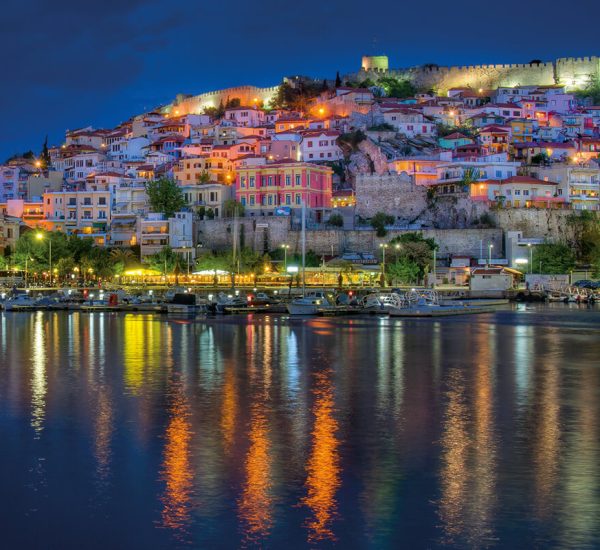
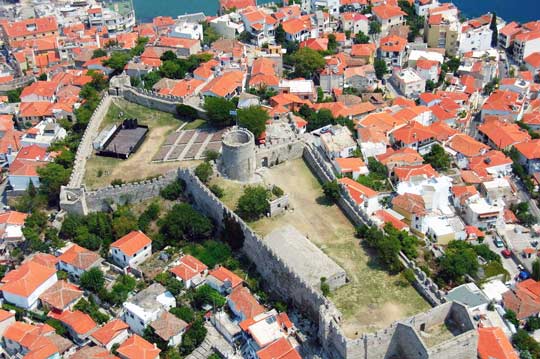
A landmark of the city, with a magnificent view both of it and of the port. It was built by the Ottomans on the ruins of a Byzantine castle. Characteristic are the two square towers in the northern corners, the polygonal tower in the middle of the eastern side and the bastion on the southeastern side. Cultural events are organized in the outdoor theater.
Imaret
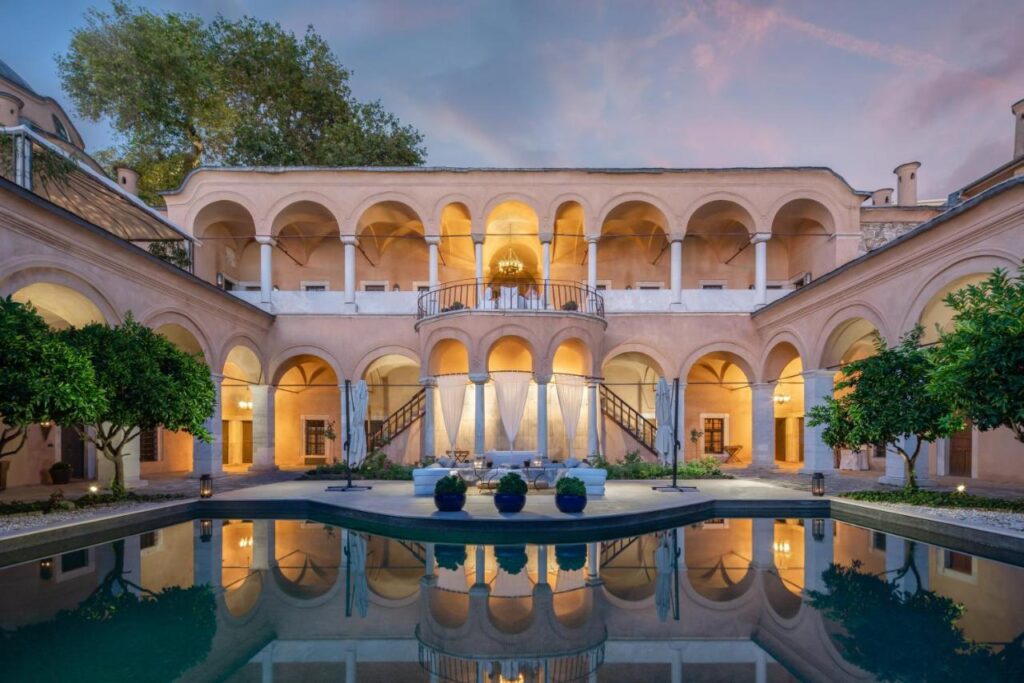
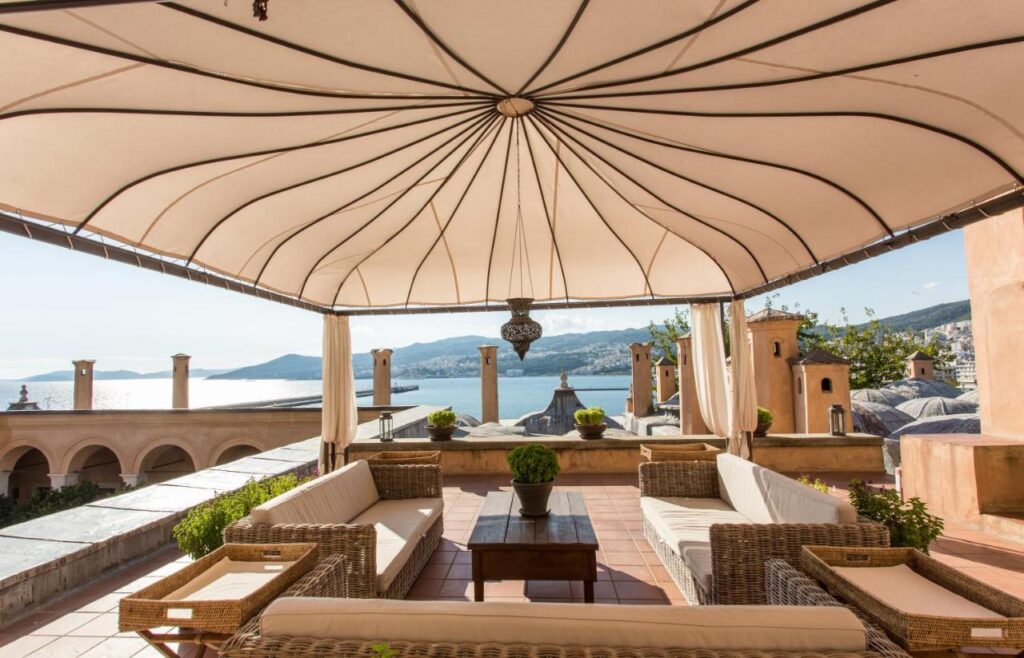
A beautiful Ottoman Baroque monument, which was created by Mehmet Ali in 1817 as a Muslim seminary and was exemplary restored by the Misirian family of tobacconists – more specifically by Anna Misirian – in 2001, who turned it into a luxury hotel. The characteristic lead domes and chimneys at various heights, the many curves and geometric shapes as well as the wonderful inner courtyards characterize the complex, which has even been declared a listed building. To browse it you need a permit, since the space is private.
Archaeological Museum
It also includes exhibits from Eastern Macedonia and Thrace, such as from the necropolises of Oisimi, Galipsos and Abdira. On display are collections of finds from the excavation of Neapolis (Ancient Kavala), Amphipolis, the settlement of Dikili Tas from the Bronze Age and an extremely interesting collection of finds from the Neolithic period.
Municipal Museum
It houses a gallery and a sculpture gallery of Greek artists, traditional objects (uniforms, tools, utility objects, embroideries, etc.) as well as the historical archive. Finally, his photography, cinematography and theater collection are very interesting.
Municipal Tobacco Museum
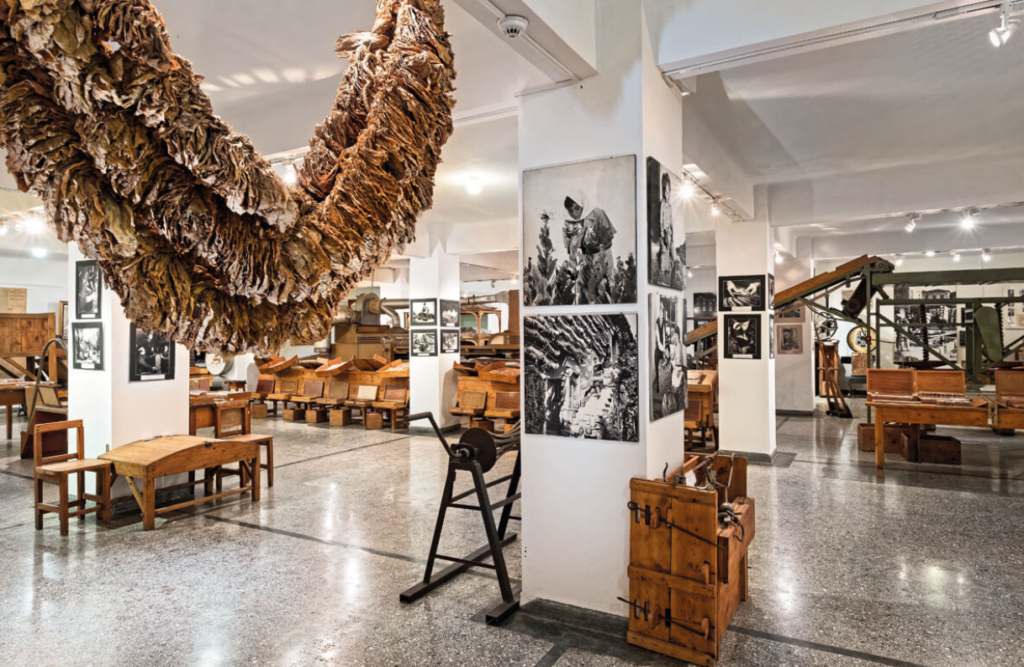
It is organized into seven thematic sections (cultivation, classic processing, toga processing, exhibition samples, tobacconists-tobacco trade, tobacco workers-tobacco trade union and cigar industry) and has a huge historical archive. The revival of classic tobacco processing with the construction of exhibition samples is also very interesting.
Municipal Tobacco Warehouse
Built in the first decades of the 20th century as a tobacco warehouse of the Turkish tobacconist Kizi Mimin, in an architectural style of Ottoman neoclassicism (false columns, capitals, cornices) with the use of baroque elements, such as the imposing crowning of the roof with the four crowns, many sculptures and reliefs, it is located in Kapnergati Square.
Medieval Aqueduct (Arches)
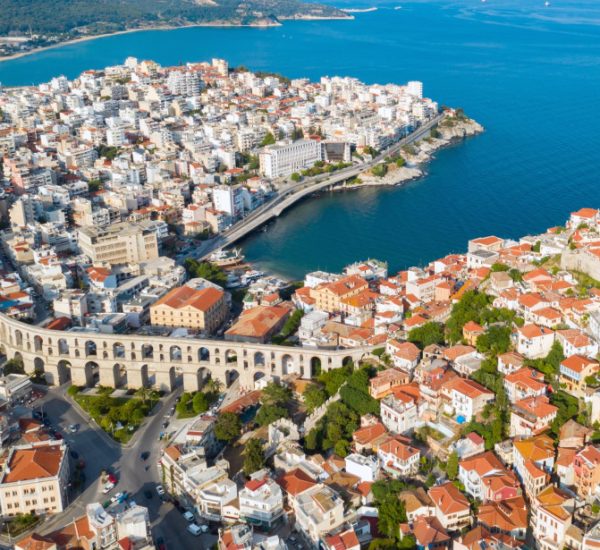
It is part of the irrigation system of the Old Town. A Byzantine work, which was repaired several times during the Ottoman years, it is 280 m long, 25 m high and consists of sixty arches of four different sizes. Above the Kamares are still some refugee houses and around some old shops from the first half of the 20th century, as well as the Muslim seminary (Madrasas).
Lazarist Monastery
A building with neoclassical influences, it was built between 1888 and 1892 and housed the French consulate.
Great Club
Next to the town hall, the imposing building of neoclassical architecture with ancient Greek elements was built in 1909 by the Philoptochos Brotherhood of Ladies to house the Club of the Greek Community of the city.
Adolf Wix Building
Neo-Gothic architectural style with Baroque elements, built in 1898 by German baron Adolf Wix as a business headquarters and residence.
Town Hall
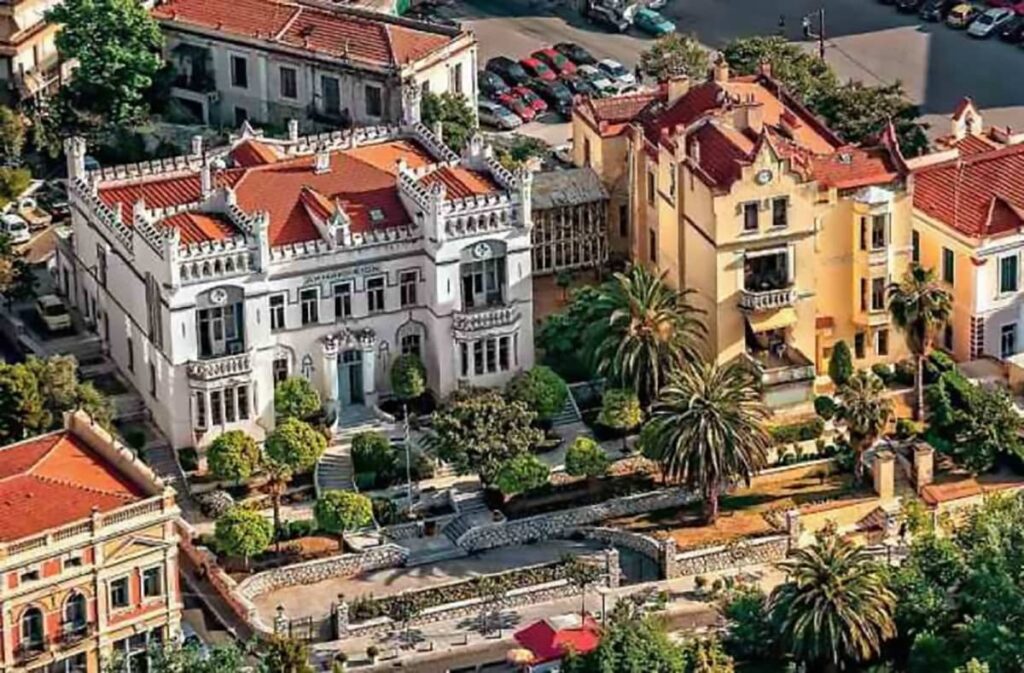
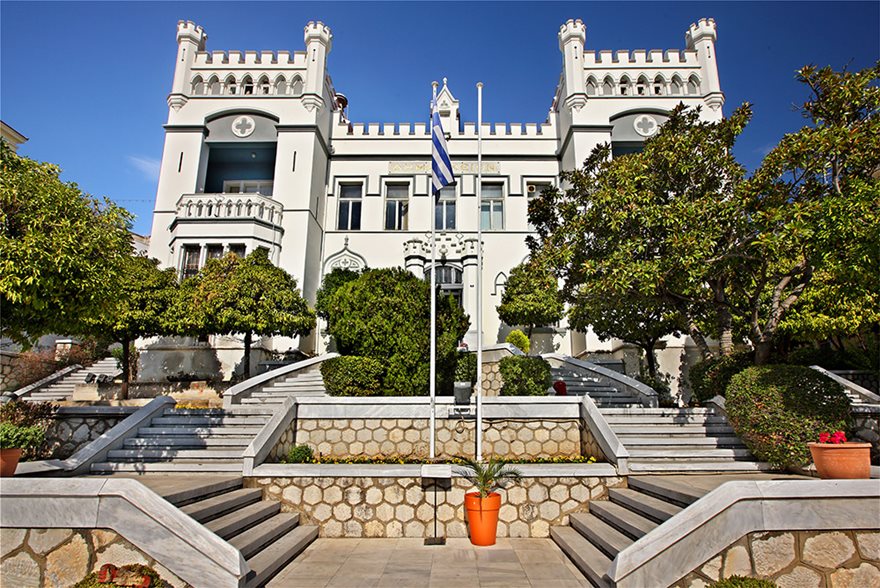
Miniature of a Hungarian tower, it was the residence of the Hungarian tobacconist Pierre Herzog. It was built in 1895 and in 1937 (during the mayorship of Athanasios Balanos) it was bought by the Municipality of Kavala to house the town hall.
Tokou Mansion
Built in 1879 in Ottoman neoclassical style with baroque elements to house the residence of the tobacco merchant D. Tokou, today it houses the Ephorate of Byzantine Antiquities.
Municipal Conservatory
It has impressive gables, columns and sculptural decoration and is one of the oldest houses, built before 1864. It originally belonged to the Grigoriadis brothers, one of the first tobacconists in the city.